
Team
University of Perugia
Department of Engineering
CIRIAF
The University of Perugia (UNIPG) was established in 1308, offering degrees in Law and General Arts. Today, the university conducts research, education, and consulting activities across 14 Departments, serving approximately 23,500 students, 1,100 professors and researchers, and 1,000 staff members.
UNIPG has successfully secured over 30 projects in Horizon 2020 and Horizon Europe, with half of them being collaborative or networking projects. This demonstrates UNIPG’s strong managerial capabilities and dedication to expanding its international collaborations on cutting-edge topics that impact both student education and the economic and societal development of the region. The UNIPG-CIRIAF research team will be actively involved in the LIGNOCAP project, with a focus on developing and implementing its multidisciplinary aspects. These research groups will leverage their expertise in experimental thermophysical assessment, dynamic building energy simulations, and environmental investigations to contribute to the project’s success.
The Department of Engineering at the University of Perugia (UNIPG-DI). The Department of Engineering at UNIPG-DI is renowned for its training programs and cutting-edge research in the fields of environmental, energy, and management engineering. Not only does the Department of Engineering focus on providing high-quality education, but it also actively promotes theoretical and practical research in environmental and energy engineering. This includes the development and assessment of materials, as well as the exploration of associated environmental and socio-economic implications. The Engineering Department at UNIPG-DI boasts extensive experience in EU and US research projects. Additionally, the department has established collaborations with leading international institutions. By leveraging these methodologies and expertise, our collaborative research team has the unique opportunity to develop specialized assessment protocols and analysis metrics. This will enable us to evaluate microclimate implications and quantify interaction dynamics with the built environment. Drawing on our collective knowledge, our research team will develop a comprehensive investigation protocol utilizing advanced experimental assessment techniques and monitoring systems. This will involve conducting surface energy budget simulations to integrate predictive models and assess the impact of project actions. Through this collaboration, we aim to advance the field of environmental and energy engineering and contribute to the development of innovative solutions for sustainable built environments.
The CIRIAF – Interuniversity Research Centre on Pollution and Environment Mauro Felli at the University of Perugia (UNIPG-CIRIAF) boasts extensive experience in EU and US research projects, with collaborations with esteemed international institutions such as Princeton University. The research team at UNIPG-CIRIAF specializes in environmental sustainability of advanced technologies and applications, indoor and outdoor environmental monitoring, as well as analysis of the urban heat island phenomenon and its impact on the built environment. The interdisciplinary nature of the Department, bridging material science and environmental engineering, along with technology development, is a key strength that will be leveraged in the innovative LIGNOCAP project. By combining these methodologies, we can explore new opportunities to develop advanced technologies aimed at understanding the complex dynamics of surface energy budgets, while also considering real-world applicability and sustainability issues. This will enable us to uncover emerging trends and behaviors in various social contexts. As part of the project, the UNIPG-CIRIAF team will contribute to developing a dedicated testing procedure and assessment models to accurately quantify the thermophysical potential of proposed solutions, and explore their scalability within the built environment to maximize the project’s impact.
Franco Cotana
full Professor



Andrea Nicolini
associate Professor

Claudia Fabiani
Assistant Professor
Valentina Coccia
post doc researcher

Tommaso Giannoni
post doc researcher

Giacomo Fabbrizi
post doc researcher

Silvia Cavagnoli
post doc researcher

Nicola Ascani
phd student

University of Florence
Department of Architecture (DIDA)
The University of Florence (UNIFI) is an important and influential Centre for research and higher training in Italy, with 1800 lecturers and internal research staff, 1600 technical and administrative staff, and over 1600 research assistants and doctoral students. It is one of the largest and most productive public research systems in Italy. This result is accomplished thanks to the number of permanent and temporary researchers working in a wide range of disciplinary and scientific fields and the numerous junior scientists in training. It is also due to intensive participation in research programs of national and international relevance and to the significant scientific results achieved. External funds support the research and knowledge transfer activities. This combination of factors qualifies the Florentine institution as a modern research university and accounts for its excellent position in national and world rankings. In recent years the University of Florence has increasingly consolidated its ventures in the field of knowledge transfer: from the filing of patents to the setting up of joint workshops with businesses, through to participation in spin-off companies. Knowledge transfer activities are coordinated by CsaVRI (Centro Servizi di Ateneo per la Valorizzazione della Ricerca e la gestione dell’Incubatore), the center for the enhancement of research and management of the University’s incubator.
The Department of Architecture (DIDA) is one of the key organizational structures of UNIFI. It is responsible for the research activities and the knowledge transfer, and, in close connection with the School of Architecture, for the teaching programs too. The DIDA has administrative and expenditure autonomy and its internal regulations. The DIDA identifies its scientific and educational field in the culture and science of design, understood as a synthesis between aesthetic-humanistic, technical-scientific, and economic-organizational dimensions. The Department of Architecture is divided into various areas and specializations, which cover vast areas of knowledge. The different disciplinary areas that belong to the DIDA concern: architectural design, survey and representation of architecture, history of architecture, conservation and restoration, science and technology of constructions, building physics, architectural technology, valuation, industrial design, urban and landscape design.
Fabio Sciurpi
assistant professor

Cristina Piselli
assistant professor
Cristina Carletti
assistant professor
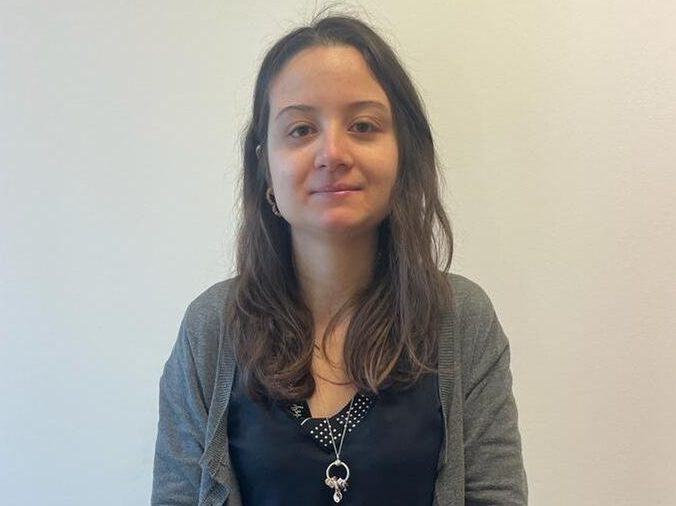
Carolina Santini
post doc researcher
University of Palermo
Engineering Department
The University of Palermo (UNIPA) is a consolidated cultural, scientific and educational presence in central-western Sicily. It was born on January 12nd, 1806 when Ferdinand III of Bourbon, king of Naples and the Two Sicilies, transformed the Panormite Academy of Studies into a University, granting it the power to award degrees in theology, medicine, law and philosophy. In 1860, with Garibaldi and the annexation of Sicily to the Savoy kingdom, the University became entirely secular and the School for engineers and architects was established. The future University was therefore about to be defined in which personalities from the scientific world such as the chemist Stanislao Cannizzaro who gave a decisive contribution to the modern atomic system, to Emilio Segrè, Nobel Prize winner for Physics in 1959, carried out their activities. Today the University of Palermo with the school of Medicine and Surgery and its 16 departments covering the most important sectors of contemporary scientific and technological knowledge. There are currently more than 40 thousand students enrolled at the University of Palermo. UNIPA, is the largest university not only in Sicily but in southern Italy. Its internationalization strategy includes 42 double degree courses and over 260 study subjects taught in English. In the 2023/24 academic year, the University activated 74 three-year degrees, 70 two-year master’s degrees and 9 single-cycle master’s degrees, 4 telematic degrees and 25 study courses in the Territorial Centers (8 in Agrigento, 5 in Caltanissetta and 12 in Trapani). The picture is completed by around thirty Doctorate programmes, many of which have the international doctorate qualification.
The Engineering Department (DI) was born in 2019 from the merger of the three Departments DICAM, DEIM, and DIID, ensuring the achievement of the “common Engineering dimension” that characterized the Faculty of Engineering in the past. The reunification of the three Departments has allowed: unity in teaching; the unity of scientific research and the unity of third mission activities.
The DI consists of 291 teachers (104 RTDs, 16 permanent researchers, 97 2nd-level professors, and 74 1st-level professors), supported by a technical-administrative staff consisting of 87 personnel. The DI is located on the university campus of Viale delle Scienze and spread over 4 buildings: 6, 8, 9 and 10 with the presence of over 80 laboratories. For the A.Y. 2022-2023, the educational offer includes 19 three-year degree courses and 18 master’s degree courses, with a total number of students enrolled of approximately 5,700; Furthermore, 7 PhD courses are currently active. There are various fields of research in the engineering field: biotechnology, environment and resource efficiency, future and emerging technologies, information and communication technologies, photonics; nanotechnology; Safe, clean, and efficient energy; Smart, green and integrated transport; the search for alternative, intelligent and low-impact solutions, the analysis of the sustainability performance of buildings and systems, etc. Furthermore, the interdisciplinary collaboration of knowledge, shared best practices, the synergy encouraged between the different research groups and the activation of cross-fertilisation processes represent great strengths for the DI, improving its international reputation and the ability to attract funding and resources from competitive national and international research programs with positive effects on the University.
In the DI, the Environmental Technical Physic research group deals with the study of interactions between energy systems and the environment. Particular attention is given to the analysis of the environmental energy performance of building-plant systems, to the analysis of indoor comfort with a focus on energy efficiency in buildings, on technologies powered by renewable energy and on the decarbonisation strategies of systems and processes.
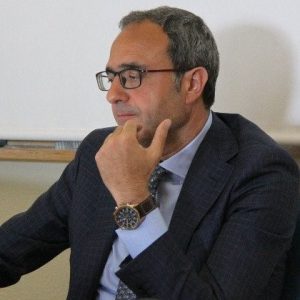
Maurizio Cellura
full professor

Sonia Longo
associate professor
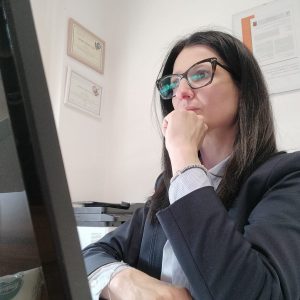
Giuseppina Ciulla
associate professor

Francesco Guarino
assistant professor

Domenico Panno
associate professor

Antonino D’amico
assistant professor
Andrea Guercio
post doc researcher